
1FZ-FE Engine: Complete Buyer’s Guide for Toyota Land Cruiser 80 Series
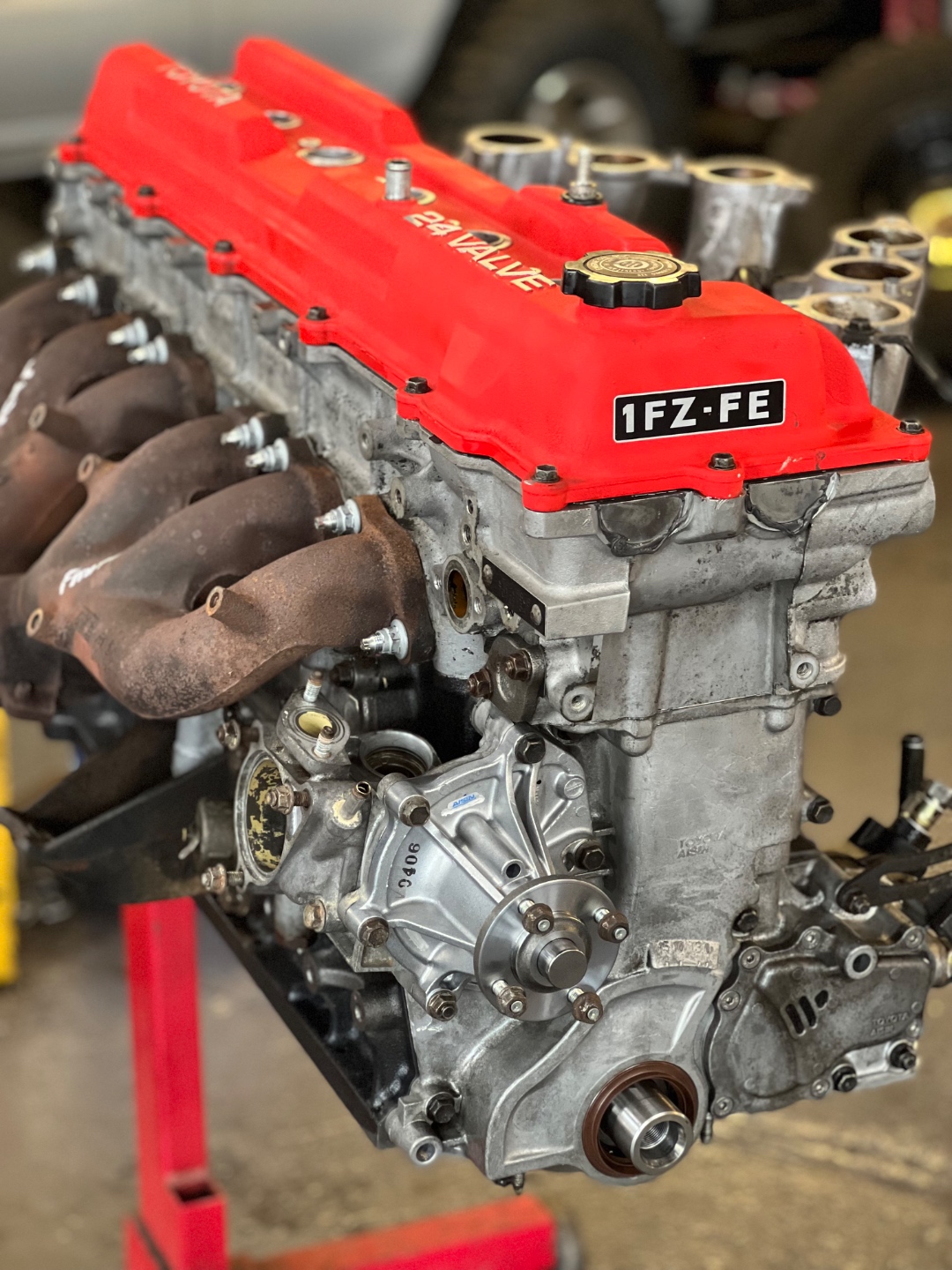
Hunting for a replacement 1FZ-FE engine? You already know what you’re working with: one of the most durable inline-six gasoline engines Toyota ever built. The 4.5-liter iron-block workhorse that powered the Toyota Land Cruiser 80 Series from 1993 through 1997 has a cult following for a reason — it runs for 250,000 miles and beyond if you treat it right. This guide covers specs, the critical differences between the two US-spec variants, what changes between JDM and US-market engines, and what to do before you drop one in your truck.
1FZ-FE Engine Specifications
The 1FZ-FE is a 4.5-liter inline-six DOHC gasoline engine with electronic fuel injection. Full specs:
- Engine Code: 1FZ-FE
- Configuration: Inline-6, DOHC, 24-valve
- Displacement: 4,477 cc (4.5L)
- Bore x Stroke: 100.0 mm x 95.0 mm
- Compression Ratio: 9.0:1
- Power Output: ~212 hp at 4,600 rpm
- Torque: ~275 lb-ft at 3,200 rpm
- Fuel System: EFI (electronic fuel injection)
- Fuel Type: Unleaded gasoline
- Oil Capacity: 6.9 quarts with filter
- Production Years: 1993–1997 (US FZJ80); continued in FZJ105 through 2002
- Compatible Vehicles: Toyota Land Cruiser FZJ80 (1993–1997), Toyota Land Cruiser FZJ105 (1998–2002), Lexus LX450
The Two US-Spec 1FZ-FE Variants — This Is Critical
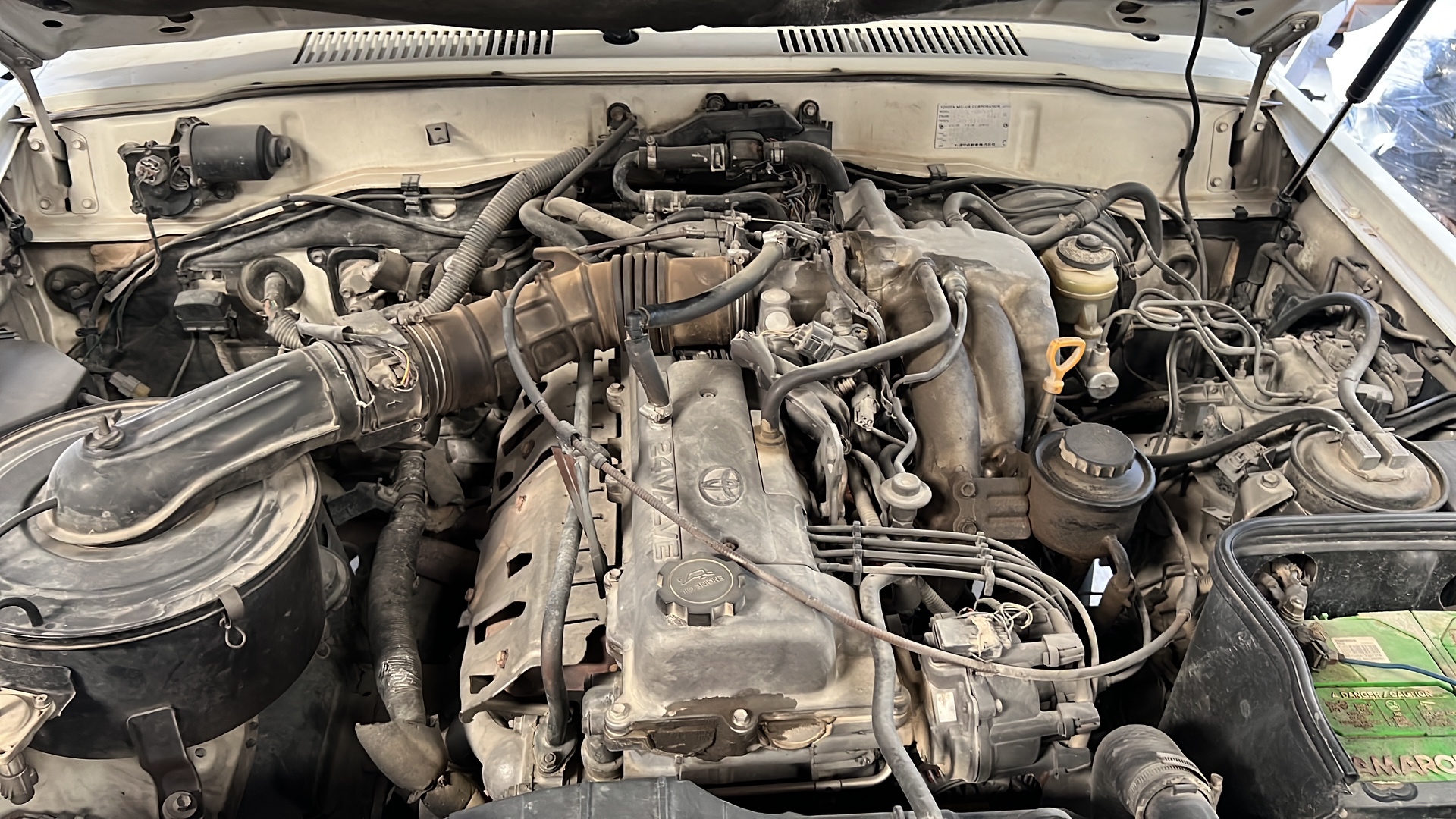
The long block is essentially the same across all years. The externals are not. There are two distinct generations of the US-market 1FZ-FE and they are not interchangeable without modifications. You must know which one you have before ordering a replacement engine.
1993–1994: Pre-OBD
- MAP sensor-based fuel management
- PAIR (Pulsed Secondary Air Injection) system on the exhaust side
- O2 sensors located at the exhaust manifold
- Side-by-side dual catalytic converters
- Transmission: A442F 4-speed automatic with electronic overdrive
- No OBD diagnostic port
1995–1997: OBD-II
- OBD-II compliant — full diagnostic port under the dash
- Mass airflow (MAF) sensor replaces MAP
- Inline catalytic converter with pre-cat and post-cat O2 sensors
- Revised emissions plumbing — no PAIR system
- Transmission: A343F 4-speed automatic
The long block, head, and internals are interchangeable between years. The external sensors, emissions hardware, intake setup, and transmission are year-specific. When you install a JDM long block, you will be transferring your existing external components onto it — or sourcing the correct year-match externals separately. Get your year right before you order.
1FZ-FE in the 100 Series and 105 Series (FZJ100 / FZJ105): The Higher-Output Variant
Toyota continued the 1FZ-FE in the Land Cruiser 100 and 105 Series from 1998 through 2002 in select markets, but this version has meaningful differences from the 80 Series unit:
- Coilpack ignition: The 100/105 Series 1FZ-FE replaced the distributor with a coil-on-plug (coilpack) system — one individual coil per cylinder mounted on the valve cover. The distributor-based ignition used in the 80 Series and the coilpack system are not directly interchangeable.
- More horsepower: The 100/105 Series variant produces approximately 235–245 hp depending on market spec — a noticeable step up from the ~212 hp US-spec 80 Series unit. The increase came from revised intake porting and the updated ignition system.
- How to identify: Look at the top of the engine. If you see individual coils sitting on the valve cover rather than a single distributor cap at the rear of the head, it is a 100/105 Series unit.
Our standard 1FZ-FE package is sourced from 80 Series donors with distributor-based ignition that matches the FZJ80 factory harness directly. If you are interested in the higher-output coilpack variant for a custom build, contact us to discuss availability.
JDM vs US-Spec: What’s Different and What You Need to Address
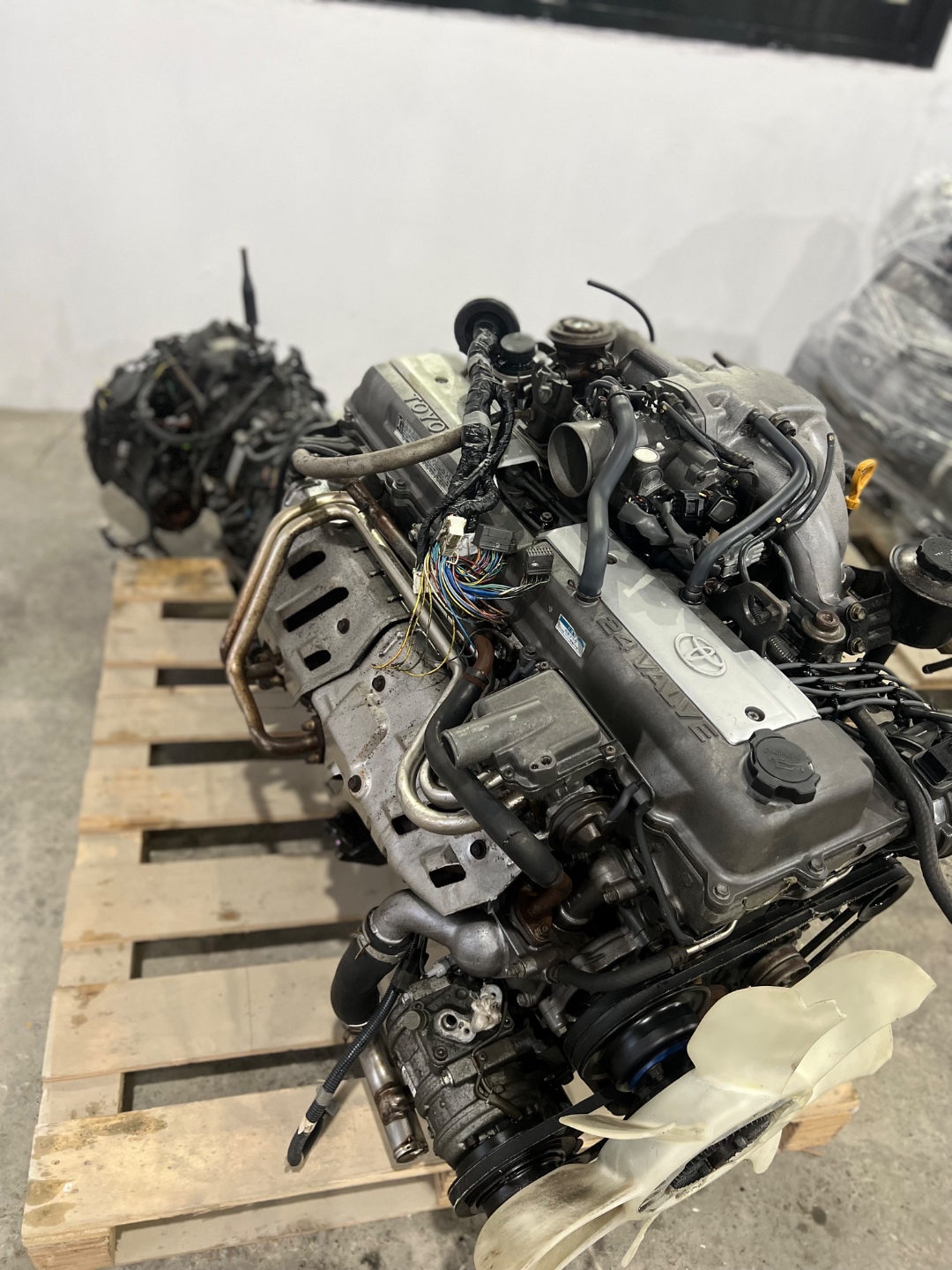
All of our 1FZ-FE engines are JDM-sourced. The long block is the same engine — same displacement, same head, same internals. But JDM engines came from a market with different emissions requirements, and there are two external differences that must be addressed before installation.
Crank Position Sensor Gear
US-market FZJ80s use a crank position sensor as part of the ignition and OBD system. JDM engines did not have this requirement, so the crank reluctor gear is not present on the crank snout of a JDM block. You will need to transfer the crank position sensor gear from your existing engine (or a US-spec donor) before the JDM engine will work correctly with your truck’s electronics. This is a straightforward job — best done on the engine stand before installation, not after the engine is in the bay.
EGR System
US-spec engines have an EGR (Exhaust Gas Recirculation) system. JDM engines do not. If your state requires emissions testing, plan for this accordingly. Many builders delete the EGR entirely at this point since the engine is already out — a clean and common solution on a truck this age.
Engine Stand Baseline — Do This Before Installation
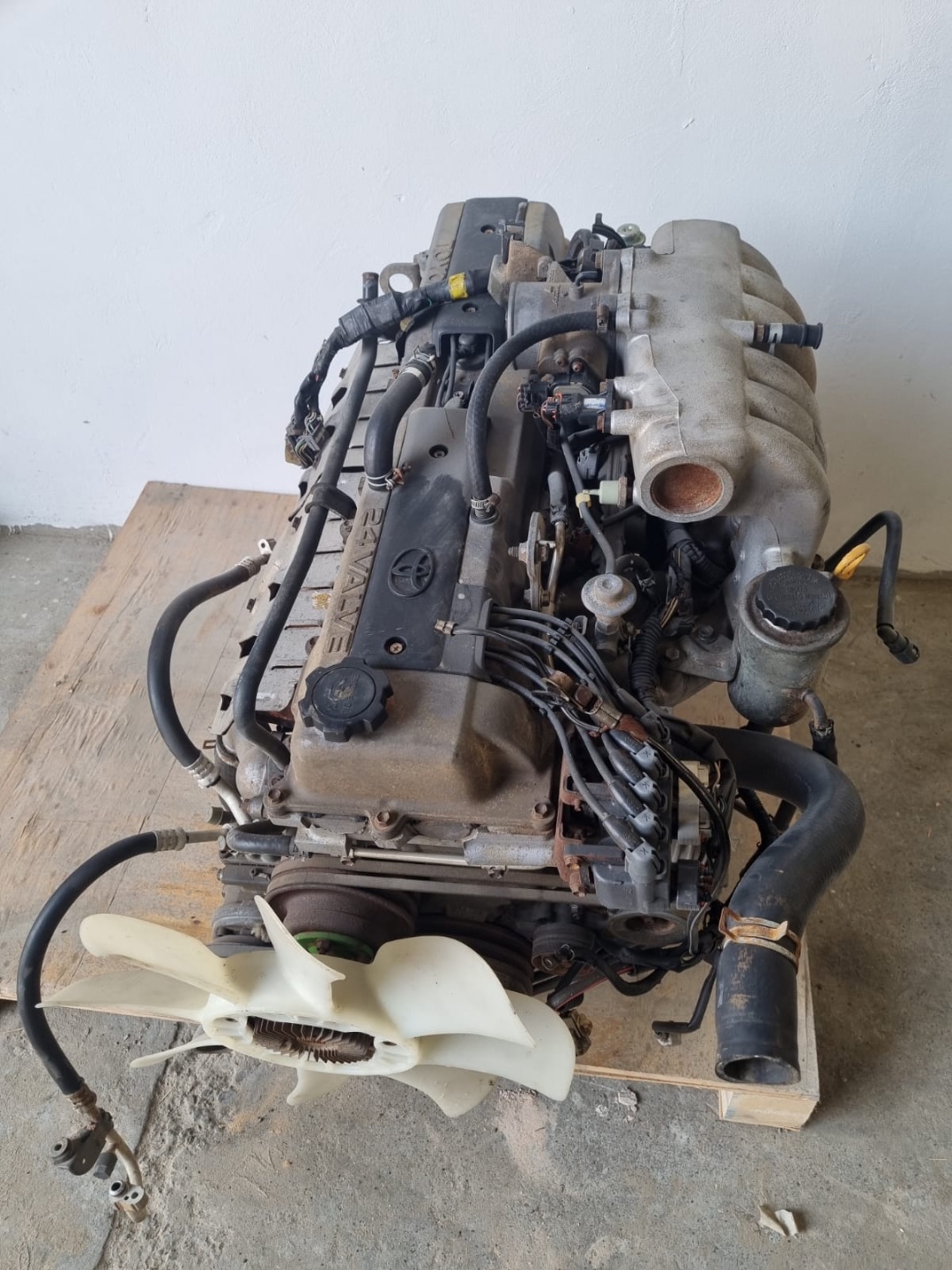
Our engines come from running, driving vehicles and are compression-tested before they ship. That said, they are used engines — 25 to 30 years old — and rubber degrades on a timeline, not a mileage chart. We strongly recommend performing a full baseline service on the engine stand before installation.
Doing this work on a stand is dramatically easier than doing it in the engine bay. Once the engine is in the truck, access to the rear main seal, lower hoses, and back of the block becomes a several-hour job. On a stand, it’s an afternoon.
Stand baseline should include:
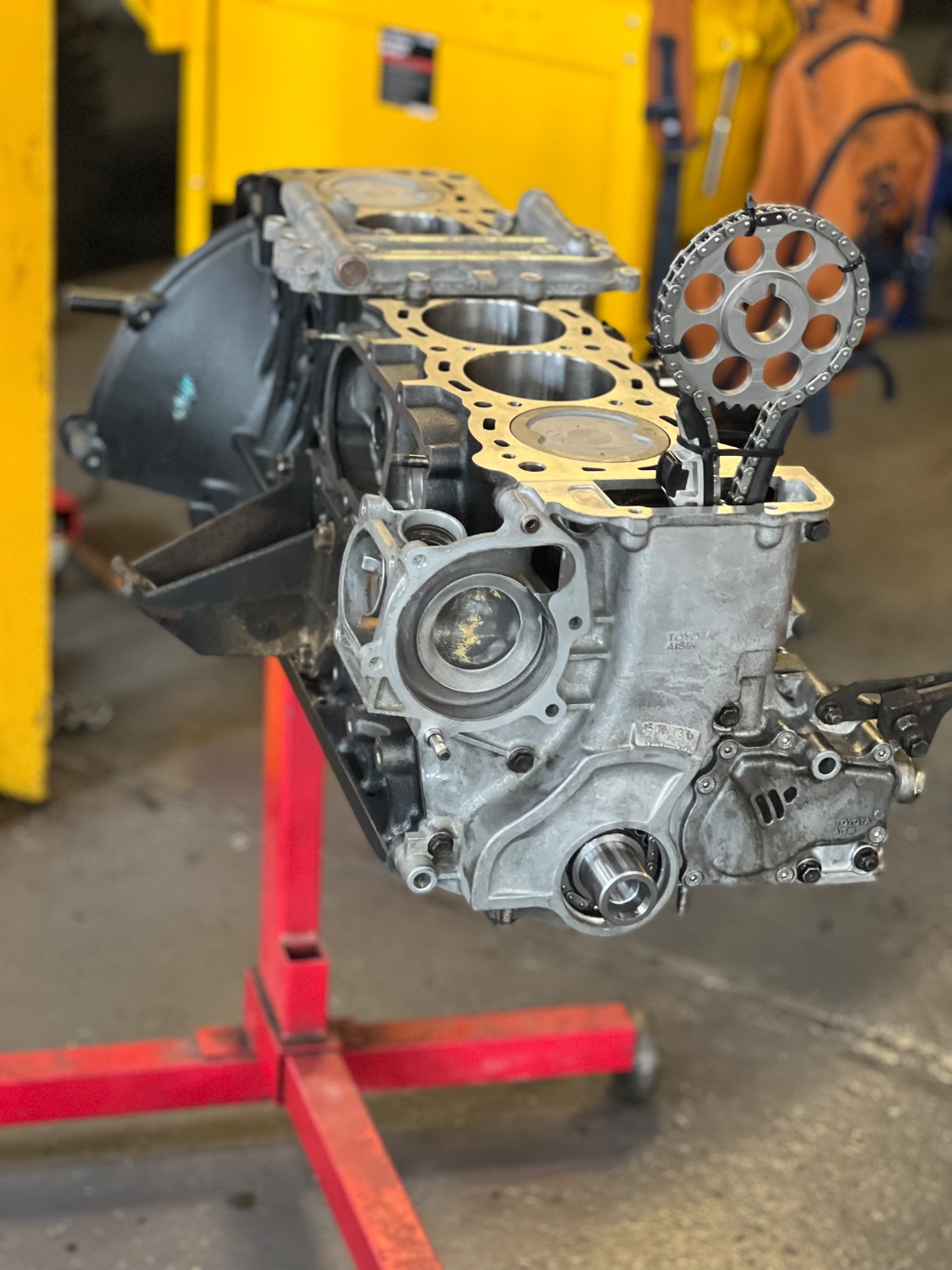
- Timing chain and tensioner — the 1FZ-FE uses a timing chain (not a belt); inspect for stretch and replace the tensioner if there is any slack
- Water pump — replace during disassembly while accessible
- All coolant hoses and O-rings — rubber is 25+ years old regardless of mileage
- Valve cover gasket
- Rear main seal — far easier on a stand than in the chassis
- Front crank seal
- Oil pan gasket — inspect and replace if weeping
- All accessory belt pulleys — inspect bearings, replace if any roughness
- Thermostat and housing gasket
- Valve clearance check — spec: 0.15–0.25 mm intake / 0.25–0.35 mm exhaust
- Crank position sensor gear transfer from your old engine
This adds a day of work upfront and eliminates the most common reasons a freshly installed engine develops a leak or fault in the first 10,000 miles. It is the right way to do this job.
Transmission Pairing by Year
| Years | Transmission | Notes |
|---|---|---|
| 1993–1994 | A442F 4-speed automatic | Electronic OD, matches Pre-OBD harness |
| 1995–1997 | A343F 4-speed automatic | Matches OBD-II engine and ECU |
| All years (manual) | H150F / H151F 5-speed | Available separately at LCH |
Our engine packages include the matching JDM transmission. The A442F and A343F share the same bellhousing pattern but have different wiring harness connections and shift logic — match your transmission to your truck’s year.
1FZ-FE vs 1HD-T: Which Engine Is Right for Your Build?
We stock both. The right choice depends on what you’re doing with the truck.
| Specification | 1FZ-FE (Petrol) | 1HD-T (Diesel) |
|---|---|---|
| Displacement | 4.5L (4,477 cc) | 4.2L (4,164 cc) |
| Configuration | Inline-6, DOHC, gasoline | Inline-6, SOHC, turbo diesel |
| Power Output | ~212 hp @ 4,600 rpm | ~165 hp @ 3,600 rpm |
| Torque | ~275 lb-ft @ 3,200 rpm | ~266 lb-ft @ 1,400 rpm |
| Aspiration | Naturally aspirated | Turbocharged, non-intercooled |
| Fuel | Unleaded gasoline | Diesel |
| Fuel Economy | 11–14 mpg | 15–20 mpg |
| Parts Availability (US) | Excellent | More limited |
| Complexity | Lower (no turbo, no intercooler) | Higher (turbo, injection pump) |
| Best For | Stock resto, US market daily driver | Overlanding, fuel economy, diesel builds |
| LCH Price | $4,300 (w/ transmission) | $9,990 |
Common Issues and What to Watch For
Head Gasket Failures
The most discussed issue on the 1FZ-FE, and it’s real. The original gasket design was prone to leakage between coolant passages, and any overheating event accelerates failure significantly. Symptoms: white smoke on cold start, coolant consumption without visible external leaks, oily film in the coolant. Our JDM engines are compression-tested before they ship — if a head gasket failure is in the history, we won’t ship the engine.
Cooling System Hoses and Thermostat
The 1FZ-FE has an elaborate cooling circuit. On any unit this age, plan to replace all hoses, thermostat, and water pump as part of your stand baseline. Rubber degrades with age regardless of mileage — do this before installation, not after.
Valve Clearances
Shim-under-bucket valvetrain requiring periodic adjustment. Spec: 0.15–0.25 mm intake, 0.25–0.35 mm exhaust. Check it during your stand baseline and eliminate one of the most common causes of gradual power loss on high-mileage FZJ80s.
Timing Chain
The 1FZ-FE uses a timing chain, not a timing belt — there is no scheduled replacement interval. Chains stretch over high mileage and can develop slack, leading to cold-start rattle and potential timing drift. Inspect the tensioner during your stand baseline and replace it if there is any play in the chain. Not a wear-interval item, but always worth checking on a used engine.
Why JDM? The Case for Japanese-Sourced Engines
Most US-market FZJ80s have been accumulating mileage for 30-plus years. Finding a clean domestic engine under 150,000 miles is genuinely difficult. Japan’s shaken inspection system creates financial pressure to retire vehicles on a regular cycle — the result is perfectly functional engines parted out at relatively low mileage. Our donors come in under 275,000 km (approximately 170,000 miles), from a market with significantly lower average annual mileage than the US.
Every unit is compression-tested to OEM spec before it ships. We pull from running, driving vehicles — not machines that sat in a yard for years. The external differences between JDM and US-spec are manageable and fully documented above.
Get Your 1FZ-FE Engine From Land Cruiser Heaven
We’re Land Cruiser specialists in Hagerstown, Maryland. Our current stock is a JDM 1FZ-FE engine with matching transmission for $4,300 — compression-tested, pulled from a running donor under 275,000 km. Questions about year fitment, crank sensor gear sourcing, or a full restoration project — call us directly.
Order online: 1FZ-FE Engine + Transmission — $4,300
Call us: (240) 347-3827
Land Cruiser Heaven LLC — 219 Frederick St, Hagerstown, MD 21740. Same-week shipping available on in-stock units.
Frequently Asked Questions
What years did the 1FZ-FE come in the Land Cruiser 80 Series?
The 1FZ-FE powered the US-market FZJ80 from 1993 through 1997. There are two distinct variants: 1993–1994 (Pre-OBD, A442F transmission, MAP sensor, PAIR system, dual side-by-side cats) and 1995–1997 (OBD-II, A343F transmission, MAF sensor, inline cat with pre/post O2 sensors). The long block is the same; external hardware and transmission are year-specific.
How many miles can a 1FZ-FE last?
A well-maintained 1FZ-FE regularly exceeds 250,000 miles, with documented examples running past 400,000 km on original internals. Longevity is directly tied to coolant maintenance — the 1FZ-FE uses a timing chain (no replacement interval), so keeping the cooling system clean and the head gasket intact are the primary longevity factors.
What is the difference between a JDM and US-spec 1FZ-FE?
The long block is identical. JDM engines lack the crank position sensor reluctor gear (required for US ignition and OBD systems) and were not built with an EGR system. The crank gear must be transferred from your old engine before installation. Both items are best handled on an engine stand before the engine goes in the truck.
Is the 1FZ-FE reliable?
Yes — cast-iron block, conventional valvetrain, EFI that rarely fails. The known vulnerabilities (head gasket, timing belt, cooling hoses) are all preventable with a proper stand baseline before installation and routine maintenance after.
How much does a 1FZ-FE engine cost?
Domestic junkyard pulls run $1,500–$3,000 without compression testing or verified mileage. A quality JDM unit with matching transmission from Land Cruiser Heaven runs $4,300 — compression-tested, from a donor under 275,000 km. A machine shop rebuild on a worn domestic block typically runs $3,500–$6,000 in parts and labor alone, without a transmission. The JDM drop-in is usually the most cost-effective path.